 The Propaganda Files
Twitter Files: Stanford's Virality Project and 'true stories'
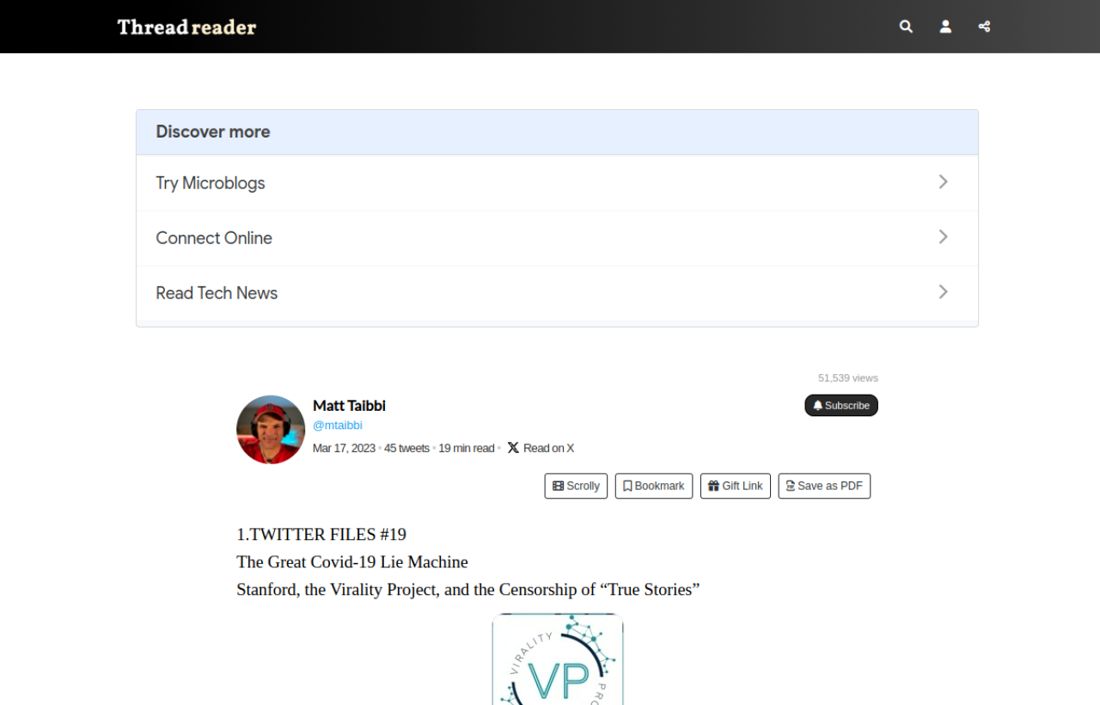
Taibbi reported that Stanford's Virality Project flagged COVID vaccine content to six major platforms, including 'stories of true vaccine side effects' it said could fuel hesitancy. The project's leaders say they mostly published public briefings, platforms decided independently, and nothing was demanded.
The project targeted vaccine-skeptical content rather than a party, though it ran during the Biden administration's vaccination push.
What the record shows
Taibbi reported that the Virality Project, which grew out of the 2020 Election Integrity Partnership, onboarded Twitter, Google/YouTube, Facebook/Instagram, Medium, TikTok and Pinterest to a shared JIRA ticketing system. Emails described 'stories of true vaccine side effects' as content platforms might act on. Taibbi said the project worked with the Surgeon General's office, the CDC, DHS's CISA and the State Department's Global Engagement Center. Flagged content included criticism of vaccine passports and posts about breakthrough infections.
In their words
“The same JIRA system from the EIP is up and running”— Stanford Internet Observatory email (per Taibbi) · source
“There was no pressure or recommendation to censor anything”— Renée DiResta, Virality Project lead · source
Project leader Renée DiResta said platforms 'independently assessed the content in line with their policies' and in most cases did nothing or added labels. She said the March 2021 email was a request for feedback with no censorship demand, and Twitter ignored the hesitancy category.
Sources
- Matt Taibbi, Twitter Files on the Virality Project (original)https://twitter.com/mtaibbi/status/1636729166631432195
- Thread Reader unrollhttps://threadreaderapp.com/thread/1636729166631432195.html
- Renée DiResta: March 17, 2021 email exchange with Twitter (primary documents)https://www.reneediresta.com/primary-documents/virality-project-march-2021/
- Jonathan Turley: Stanford project worked to censor even true storieshttps://jonathanturley.org/2023/03/19/true-stories-could-fuel-hesitancy-stanford-project-worked-to-censor-even-true-stories-on-social-media/