 The Propaganda Files
Google's AdSense rules on 'fake news' and misrepresentative content
After the 2016 election, Google publicly changed its AdSense policy to bar ads on sites that 'misrepresent, misstate, or conceal information.' Leaked internal materials in the Vorhies cache include AdSense guidance on fake news, misrepresentative content and hate speech. Coverage found shows the public policy; it did not independently describe the internal FAQ.
The policy targeted fabricated news sites of any leaning; internal discussion of defunding Breitbart, a right-wing site, fed conservative concerns.
What the record shows
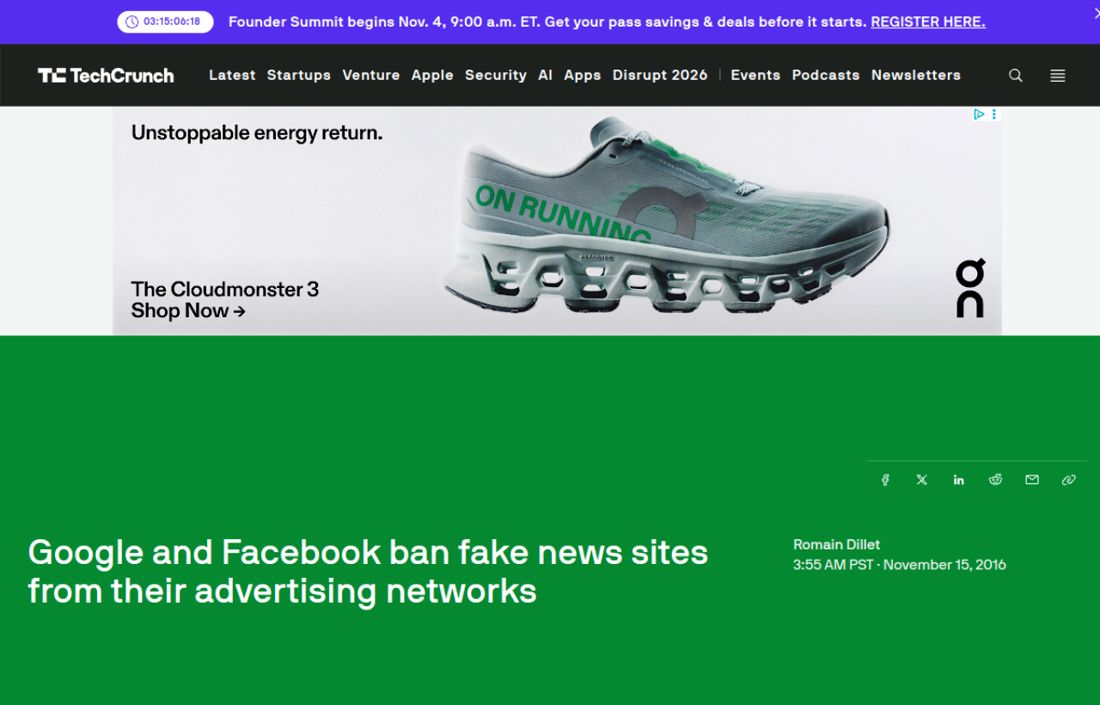
TechCrunch reported on November 15, 2016 that Google would try to block sites that 'misrepresent, misstate, or conceal information' from AdSense, cutting off ad revenue. Rolling Stone later reported Google acted against 340 sites under the policy the next year. Media Matters reported weeks after the announcement that some fake news sites were still running Google ads. The Next Web's review of the Vorhies cache described an email chain about deprioritizing Breitbart over hate speech and a considered petition to drop AdSense support for Breitbart after the 2016 election. No mainstream coverage of the specific internal AdSense FAQ was found.
In their words
“misrepresent, misstate, or conceal information”— Google AdSense policy, as reported by TechCrunch · source
Google framed the policy as an advertiser-protection and anti-fraud measure aimed at fabricated news sites; conservatives argued that 'misrepresentative' and 'hate speech' standards could be applied against right-leaning publishers.
Sources
- TechCrunch: Google and Facebook ban fake news sites from ad networkshttps://techcrunch.com/2016/11/15/google-and-facebook-ban-fake-news-sites-from-their-advertising-networks
- Fortune: Google changing policy to restrict ads on fake news siteshttps://www.fortune.com/2016/11/14/google-changing-policy-to-restrict-ads-on-fake-news-sites
- Rolling Stone: Google cracked down on 340 fake news siteshttps://www.rollingstone.com/politics/politics-news/google-cracked-down-on-340-fake-news-sites-last-year-113064/
- Media Matters: Fake news sites still using Google ads a month laterhttps://www.mediamatters.org/google/websites-peddling-fake-news-still-using-google-ads-nearly-month-after-google-announced-ban
- The Next Web: Review of leaked folders (Breitbart AdSense discussion)https://thenextweb.com/news/project-veritas-releases-internal-documents-from-google-and-alleges-anti-conservative-bias