20 files · 13 confirmed · 6 partly confirmed · 1 disputed. Every file shows what the record proves and, separately, the strongest counterpoint.
 Confirmed
In a September 23, 2025 letter to House Judiciary Chairman Jim Jordan, Alphabet said Biden administration officials 'pressed' it over COVID-19 content that did not violate its policies. It called that pressure 'unacceptable and wrong,' while saying it kept setting its policies independently. Alphabet also said YouTube would let creators banned under its retired COVID and election policies rejoin and would not empower fact-checkers.
Sep 23, 2025
Served: Republicans
Partly confirmedIn late July 2024, users including Elon Musk and Sen. Ted Cruz showed that Google's autocomplete did not suggest searches about the July 13 attempt on Donald Trump's life. Google said no manual action was taken and that its existing filters against predictions tied to political violence were working as designed but out of date. Full searches still returned results.
Jul 29, 2024
Served: Neither party
 Confirmed
On February 22, 2024, Google paused Gemini's ability to generate images of people after users showed it depicting historical figures, such as the U.S. Founding Fathers, with inaccurate races and ethnicities. The next day, senior vice president Prabhakar Raghavan published an apology and explanation. Google said its tuning for diversity had misfired and the model had become overly cautious.
Feb 22, 2024
Served: Neither party
 Confirmed
A December 2023 study in the Proceedings of the National Academy of Sciences audited YouTube's recommendations using about 100,000 automated accounts. It found the algorithm mostly recommends videos matching a user's ideology. Right-leaning accounts received more recommendations from channels the researchers classed as problematic.
Dec 13, 2023
Served: Neither party
ConfirmedOn June 2, 2023, YouTube said it would stop removing content that falsely claims the 2020 or other past U.S. presidential elections were marred by widespread fraud, errors or glitches. It said the removals curbed some misinformation but could also curtail political speech without meaningfully reducing real-world harm.
Jun 2, 2023
Served: Republicans
 Confirmed
On January 26, 2022, YouTube permanently terminated the channels of conservative commentator Dan Bongino. His main channel had been suspended for a week over a video questioning mask effectiveness. YouTube said he then circumvented that suspension by posting on a secondary channel.
Jan 26, 2022
Served: Democrats
 Confirmed
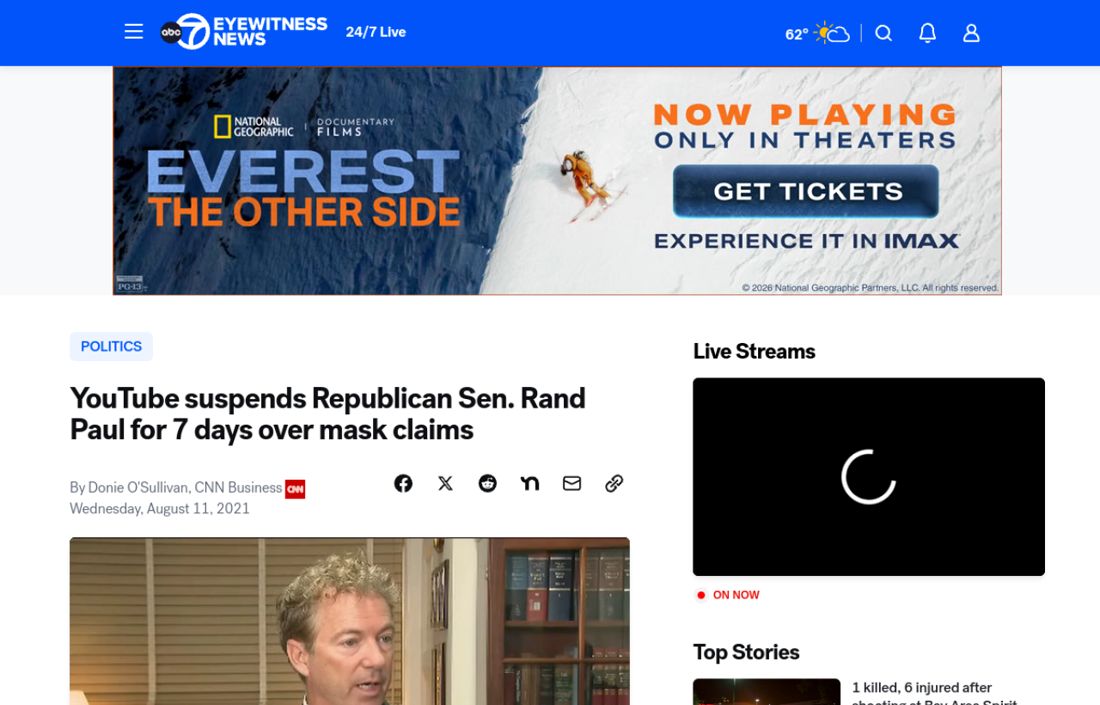
In August 2021 YouTube removed a video from Sen. Rand Paul (R-Ky.) claiming most masks do not work against COVID-19 and gave his channel a first strike. The strike blocked uploads for seven days. Paul called the suspension a 'badge of honor.'
Aug 11, 2021
Served: Democrats
 Confirmed
On August 1, 2021, YouTube suspended Sky News Australia's channel from uploading for one week under its COVID-19 medical misinformation policies. The action followed a review of posts that questioned whether a pandemic existed and how effective vaccines were. Sky News said it supports open debate.
Aug 1, 2021
Served: Neither party
 Confirmed
On June 11, 2021, YouTube removed a video from Sen. Ron Johnson (R-Wis.) and blocked him from uploading for one week. The video promoted hydroxychloroquine and ivermectin as COVID-19 treatments. YouTube said it violated its COVID-19 medical misinformation policy.
Jun 11, 2021
Served: Democrats
 Confirmed
In early April 2021 YouTube removed video of a March 18, 2021 COVID-19 roundtable hosted by Florida Gov. Ron DeSantis. The panel included Scott Atlas, Martin Kulldorff and Jay Bhattacharya. YouTube said the video contradicted local and global health authorities' consensus on children wearing masks.
Mar 18, 2021
Served: Democrats
 Confirmed
On January 12, 2021, days after the Capitol riot, YouTube removed new content from Donald Trump's channel, issued a strike for inciting violence and blocked new uploads. The restriction was extended indefinitely. On March 17, 2023, YouTube lifted it, saying it had evaluated the continued risk of real-world violence.
Jan 12, 2021
Served: Democrats
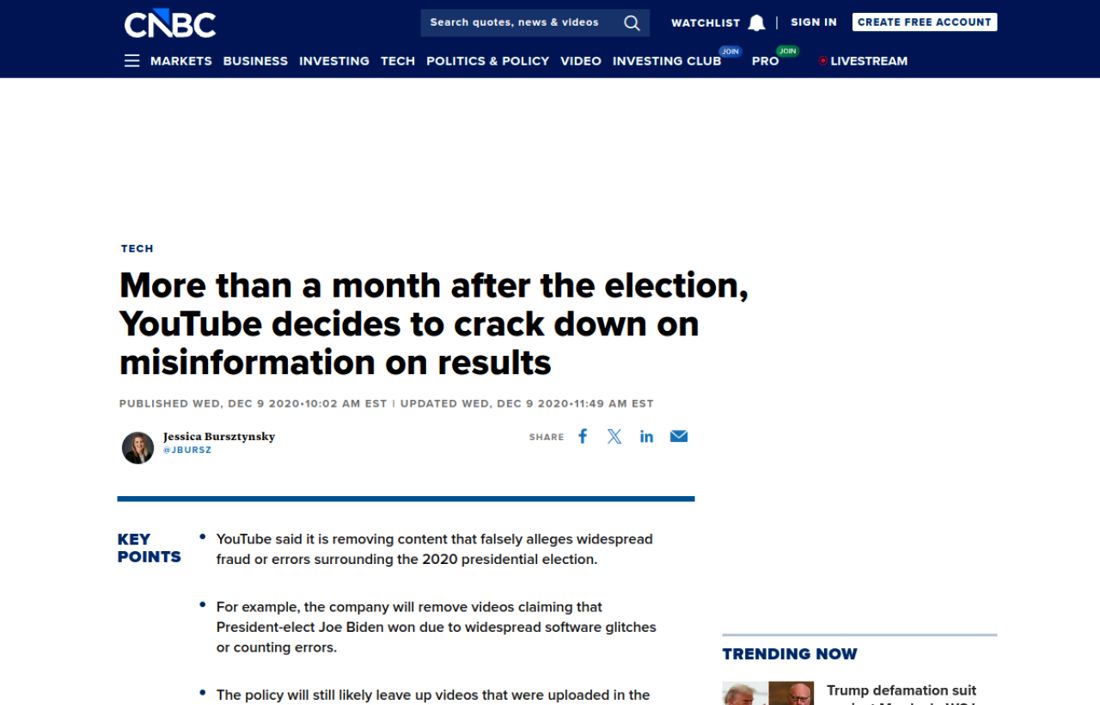 Confirmed
On December 9, 2020, YouTube began removing newly uploaded content alleging that widespread fraud or errors changed the outcome of the 2020 U.S. presidential election. It tied the timing to the 'safe harbor' deadline the day before, by which enough states had certified results. The policy was announced more than a month after Election Day.
Dec 9, 2020
Served: Democrats
ConfirmedIn a CNN interview aired April 19, 2020, YouTube CEO Susan Wojcicki said content contradicting World Health Organization COVID-19 recommendations would violate YouTube policy. The statement became a reference point in later debates over platform moderation of pandemic speech. Wojcicki led YouTube from 2014 to 2023 and died of lung cancer on August 9, 2024.
Apr 19, 2020
Served: Neither party
DisputedPsychologist Robert Epstein has estimated that biased Google search results shifted millions of votes toward Hillary Clinton in 2016. On August 19, 2019, President Trump cited the work, saying Google 'manipulated' 2.6 million to 16 million votes. Google called the claim debunked, and outside experts questioned the methods.
Aug 19, 2019
Served: Republicans
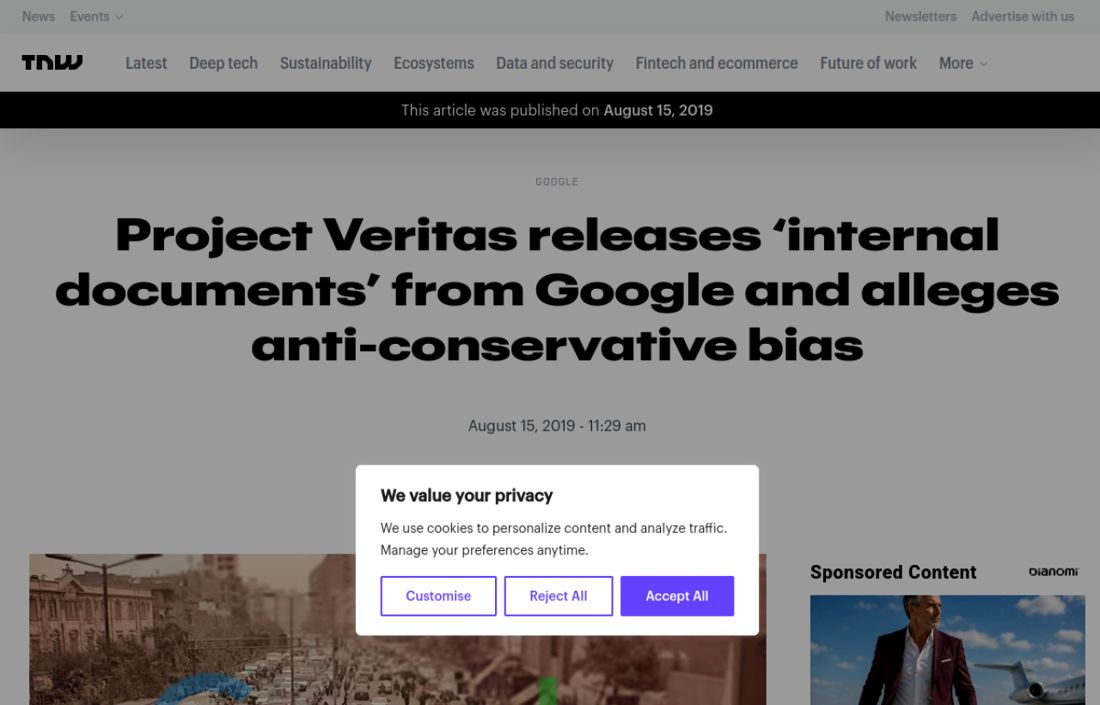 Partly confirmed
On August 14, 2019, Project Veritas published an on-record interview with former Google/YouTube engineer Zach Vorhies and a cache of about 950 pages of internal Google documents. Vorhies said they showed politically biased censorship. Several outlets judged the documents likely authentic but said they showed routine anti-spam, anti-misinformation and diversity work rather than proof of anti-conservative bias.
Aug 14, 2019
Served: Republicans
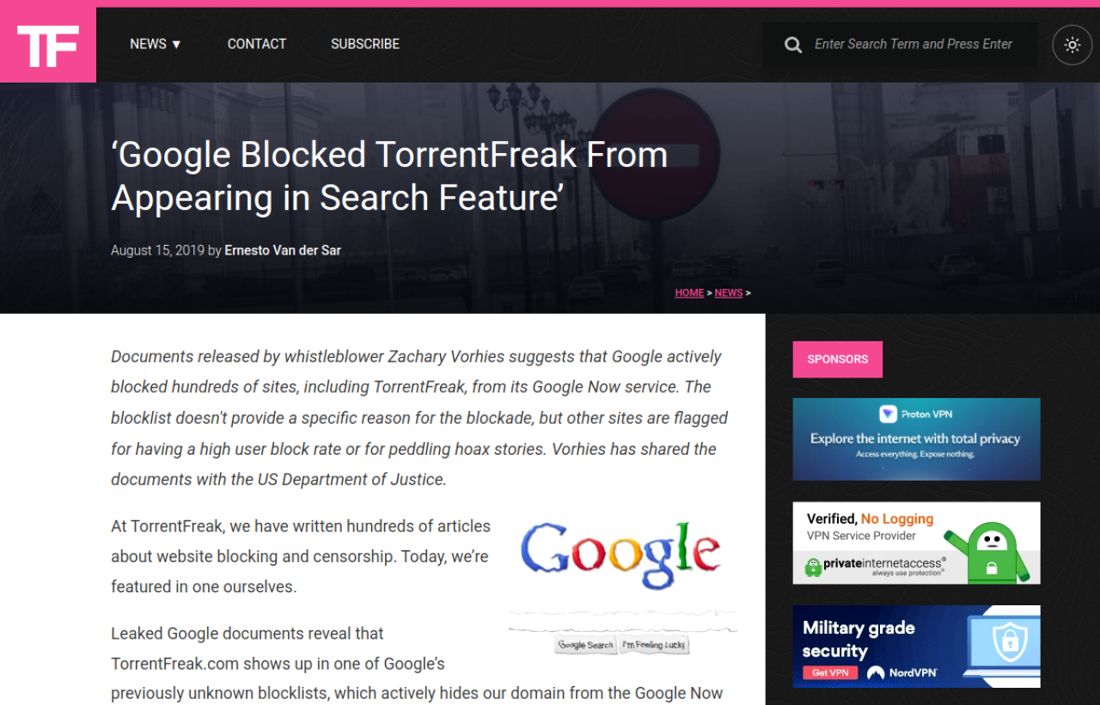 Partly confirmed
The leaked file 'news-black-list-site-for-google-now.txt' was a manual list of nearly 500 domains excluded from appearing as stories in Google Now, a mobile news feature. It included piracy and torrent sites, some ordinary commercial sites, a section labeled for 'high user block rate' that included many conservative sites, and a section of hoax sites. The file's existence and contents were widely reported; no on-record Google explanation of this specific list was found.
Aug 14, 2019
Served: Neither party
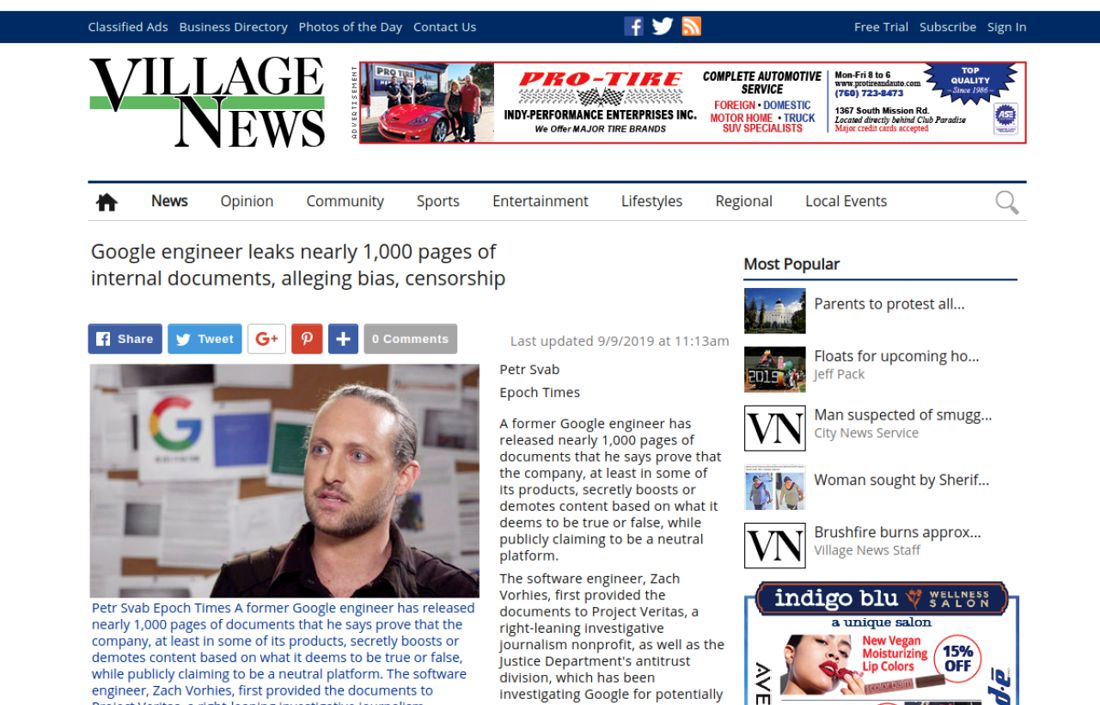 Partly confirmed
Leaked documents described a Google ranking effort, attributed to search engineer Paul Haahr, aimed at not showing fake news, hate speech and conspiracy theories unless users specifically sought them. Related materials described Google News review with 'demotion penalties' and a proposal to extend screening to 'fringe/controversial' content. The documents show categories of content, not political parties, as the stated targets.
Aug 14, 2019
Served: Neither party
 Confirmed
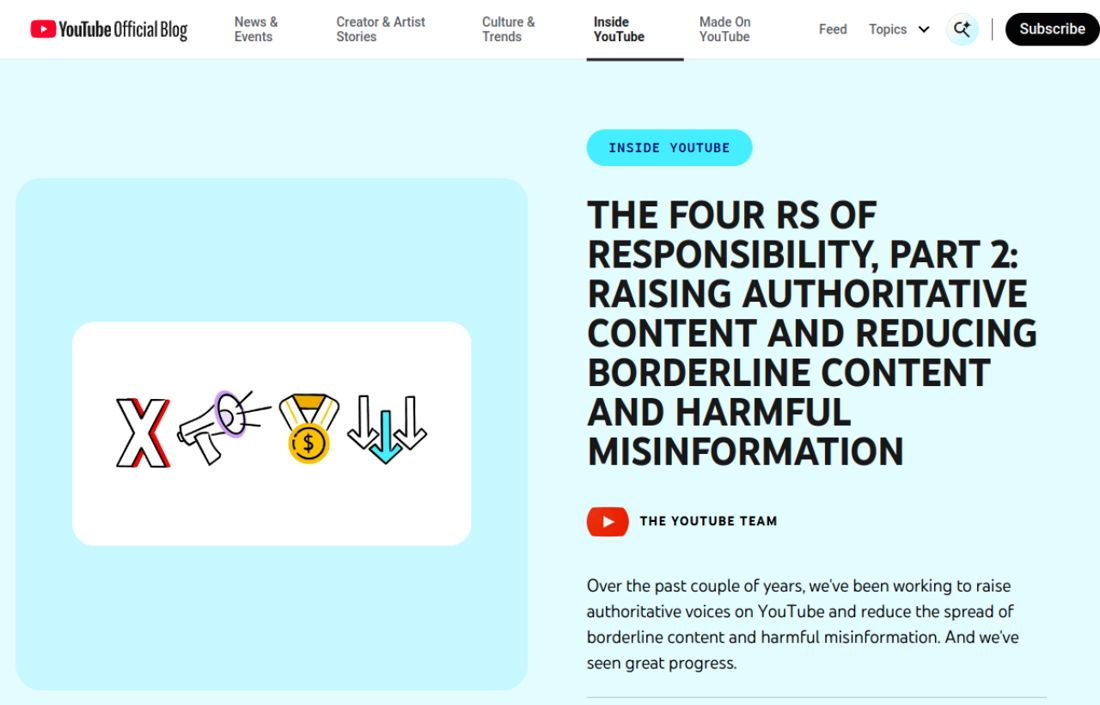
In January 2019 YouTube announced it would reduce recommendations of 'borderline content,' meaning videos that do not break its rules but come close. It paired this with prioritizing 'authoritative voices' for news queries, an approach it said began in 2017. YouTube later reported a 70% drop in watch time of such content from recommendations.
Jan 25, 2019
Served: Neither party
 Partly confirmed
A leaked design document proposed using Google's existing WebSpam manual-action penalties to keep sites out of the Google News corpus. The final scope covered sites penalized as blackhat spam, demoted, or hacked. It describes a spam and security process, not a political one.
Sep 15, 2017
Served: Neither party
 Partly confirmed
After the 2016 election, Google publicly changed its AdSense policy to bar ads on sites that 'misrepresent, misstate, or conceal information.' Leaked internal materials in the Vorhies cache include AdSense guidance on fake news, misrepresentative content and hate speech. Coverage found shows the public policy; it did not independently describe the internal FAQ.
Nov 14, 2016
Served: Neither party
 The Propaganda Files